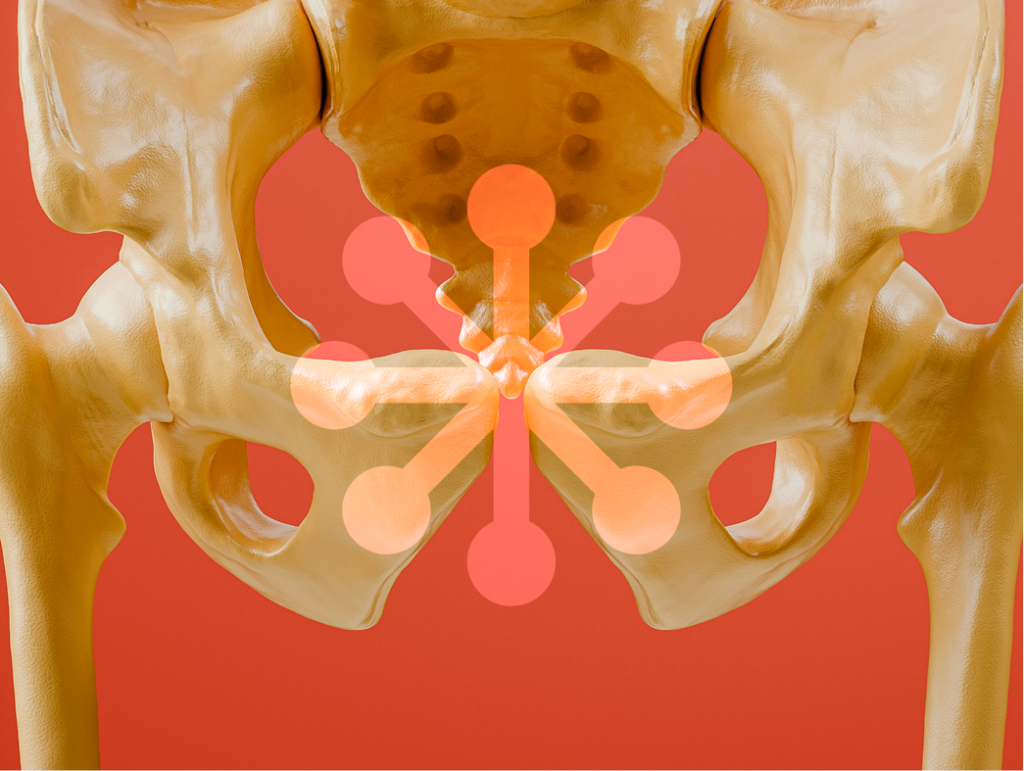
Hormones and osteoporosis: why bone health matters in perimenopause and menopause
Bones are living tissue. They are constantly being broken down and rebuilt, and hormones play a central role in keeping that balance steady. As estrogen levels fall in perimenopause and remain low after menopause, that process can tip with breakdown outpacing rebuilding. This is the foundation of osteoporosis, and it is one of the most important long-term health consequences of hormone change that women are rarely told about early enough.
What is osteoporosis?
Osteoporosis means that your bones have become less dense and more fragile, making them more likely to break. This can sometimes happen after a minor fall, a simple twist or even a cough. It is often called a silent condition because bone loss happens gradually, without pain or obvious symptoms. Many women do not know they have it until they fracture a wrist, hip or vertebra.
This is not an inevitable part of ageing. It is strongly linked to hormone deficiency, particularly low estrogen. Estrogen helps maintain bone strength, so when levels drop, bone breakdown accelerates. That makes perimenopause and menopause the most important time to start thinking about your bone health.
Why estrogen matters to your bones
Estrogen is biologically active throughout the body, including in bone tissue. When levels fall, bone breakdown can outpace the body’s ability to rebuild. The result, over time, is a reduction in bone density and an increased risk of fracture.
This effect can begin in perimenopause, before periods have even stopped. If your cycle is changing or becoming irregular, your hormones may already be fluctuating in ways that affect your skeleton. For women with premature ovarian insufficiency, the window of low hormones is longer and the implications for bone health are correspondingly greater.
Who is most at risk?
Some women have additional risk factors worth knowing about. A family history of osteoporosis, low body weight, smoking, long-term steroid use, coeliac disease, low calcium or vitamin D intake, and early menopause or periods stopping at a younger age can all increase risk. If several of these apply to you, it is worth raising bone health proactively with your doctor before a fracture gives you a reason to.
Can hormone treatment help?
Yes, and this is one of the clearest long-term health arguments for it. Replacing estrogen can slow bone breakdown, help preserve density and reduce fracture risk. For women with premature ovarian insufficiency or early menopause, guidance from the UK’s National Institute for Health and Care Excellence (NICE) is particularly clear that hormone treatment should be taken until at least the average age of natural menopause, precisely because of this bone-protective effect.
Importantly that treatment should always be individualised with the right type, dose and combination for your symptoms, history and stage of menopause. If one approach does not feel right, the answer is to adjust it, not to stop.
What else supports bone health?
Weight-bearing exercise and strength training both stimulate bone formation and slow loss. Eating adequate protein and taking calcium and vitamin D all matter. Avoiding smoking and keeping alcohol within recommended limits are also important.
But lifestyle advice should not substitute for addressing hormone deficiency directly. If low hormones are the driver of bone loss, the most effective intervention is to replace them.
What to do next
If you are in perimenopause or menopause, bone health is worth discussing at your next healthcare appointment. Ask about your personal risk factors, whether a bone density scan might be appropriate, and whether hormone treatment could play a role in protecting your skeleton as well as improving how you feel day to day.
These two goals are not in competition. Feeling better now and protecting your health for the future are both arguments for the same conversation.
Share this:

Millions of women have questions about their hormones that never get answered. Balance+ AI is here to change that.
You might also like...

Hormones and mental health

When does menopause start?
Sleep and hormones: why your nights may change in perimenopause and menopause
Utrogestan (micronised progesterone) explained
What are hormones?